DOROTA BUCZKOWSKA. NOTHING IS DEAD
Exhibitions → past
December 2025—January 2026
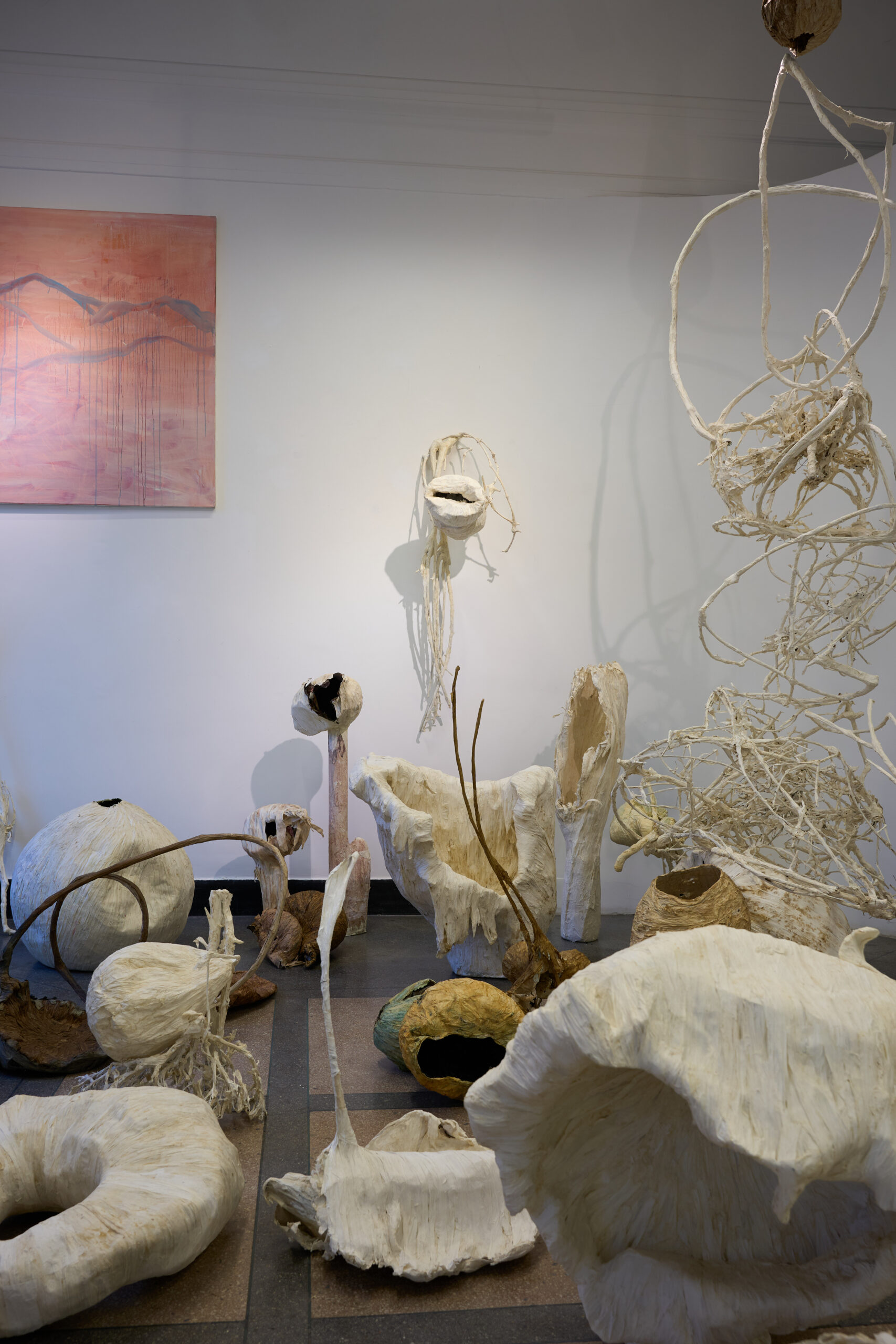
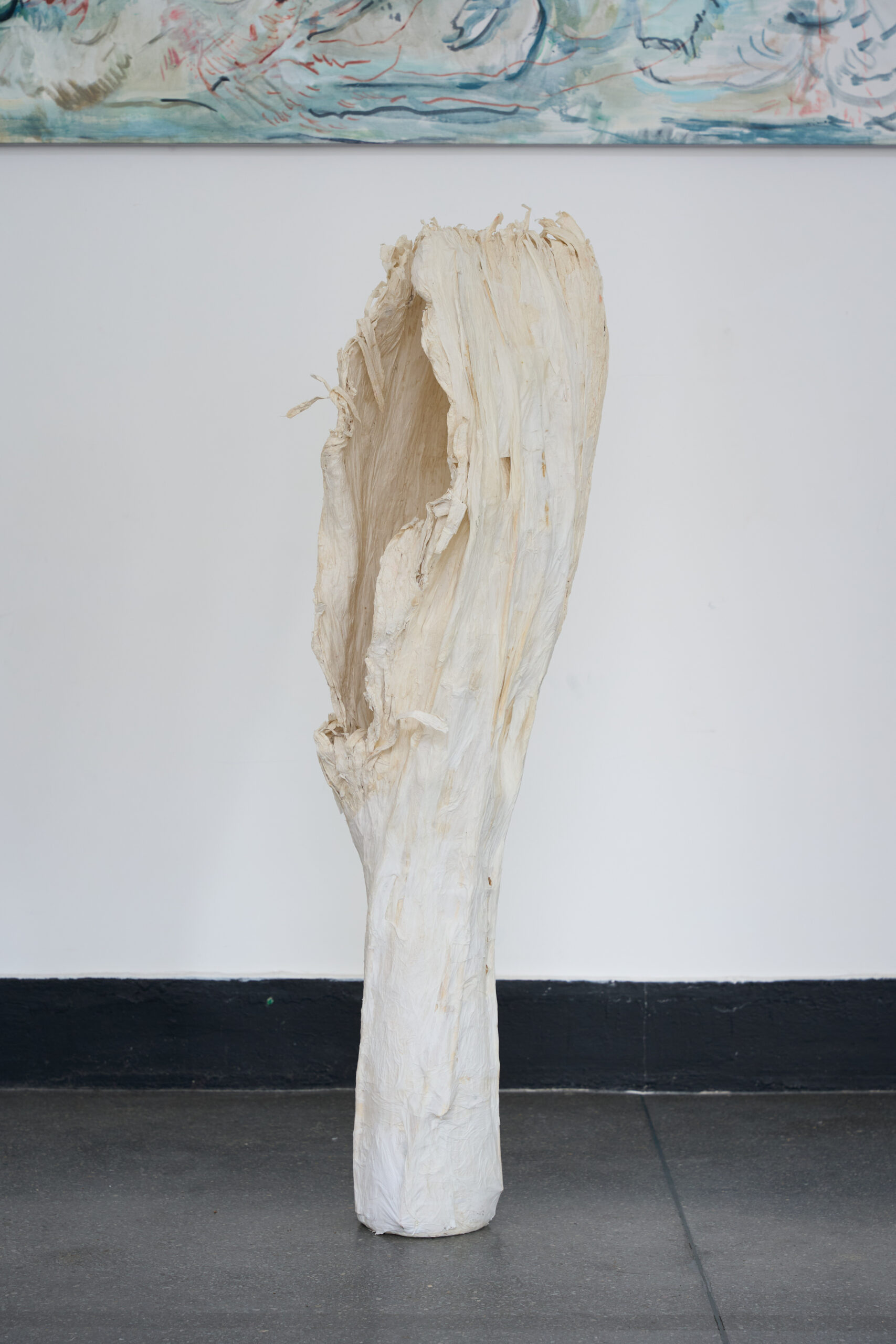
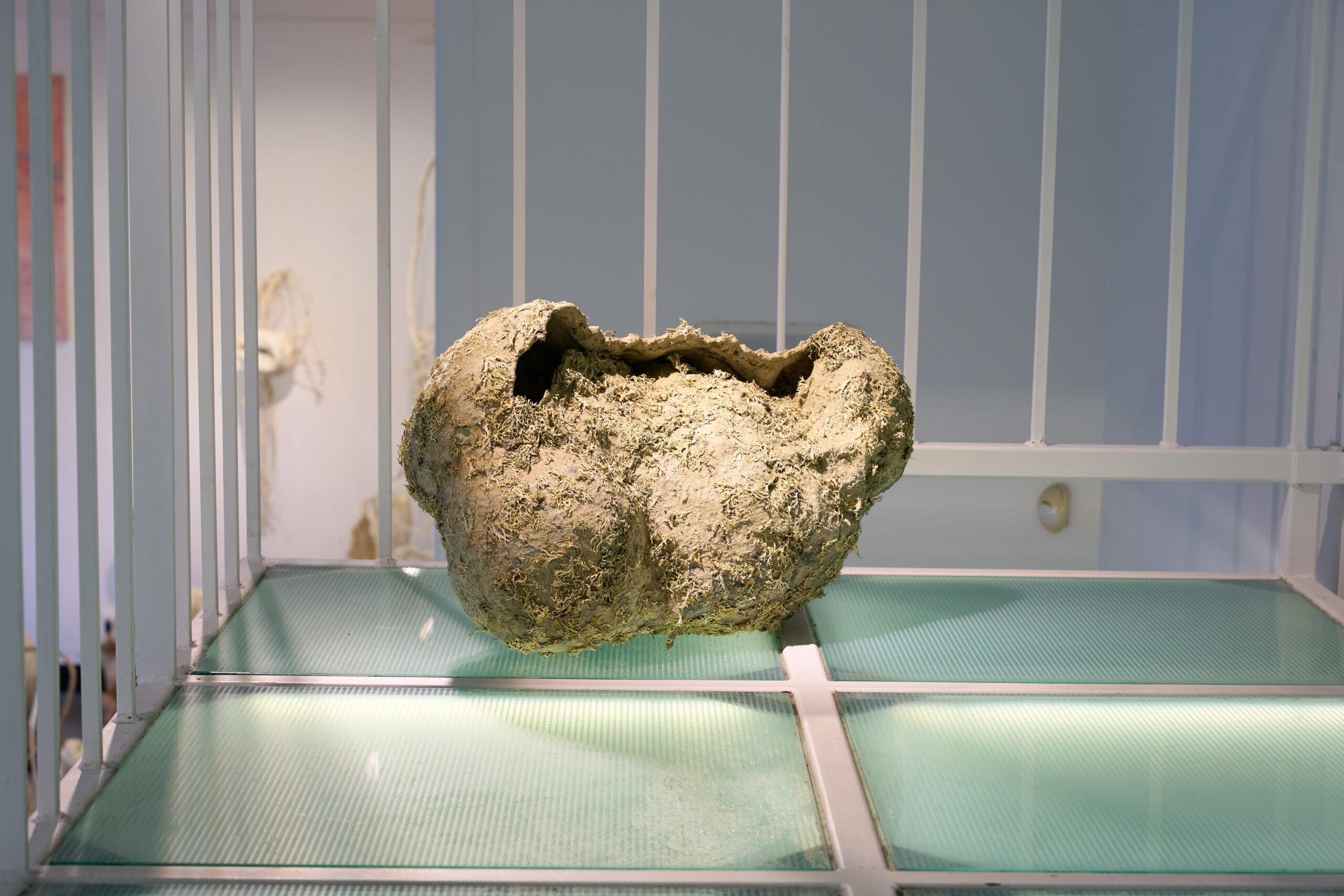
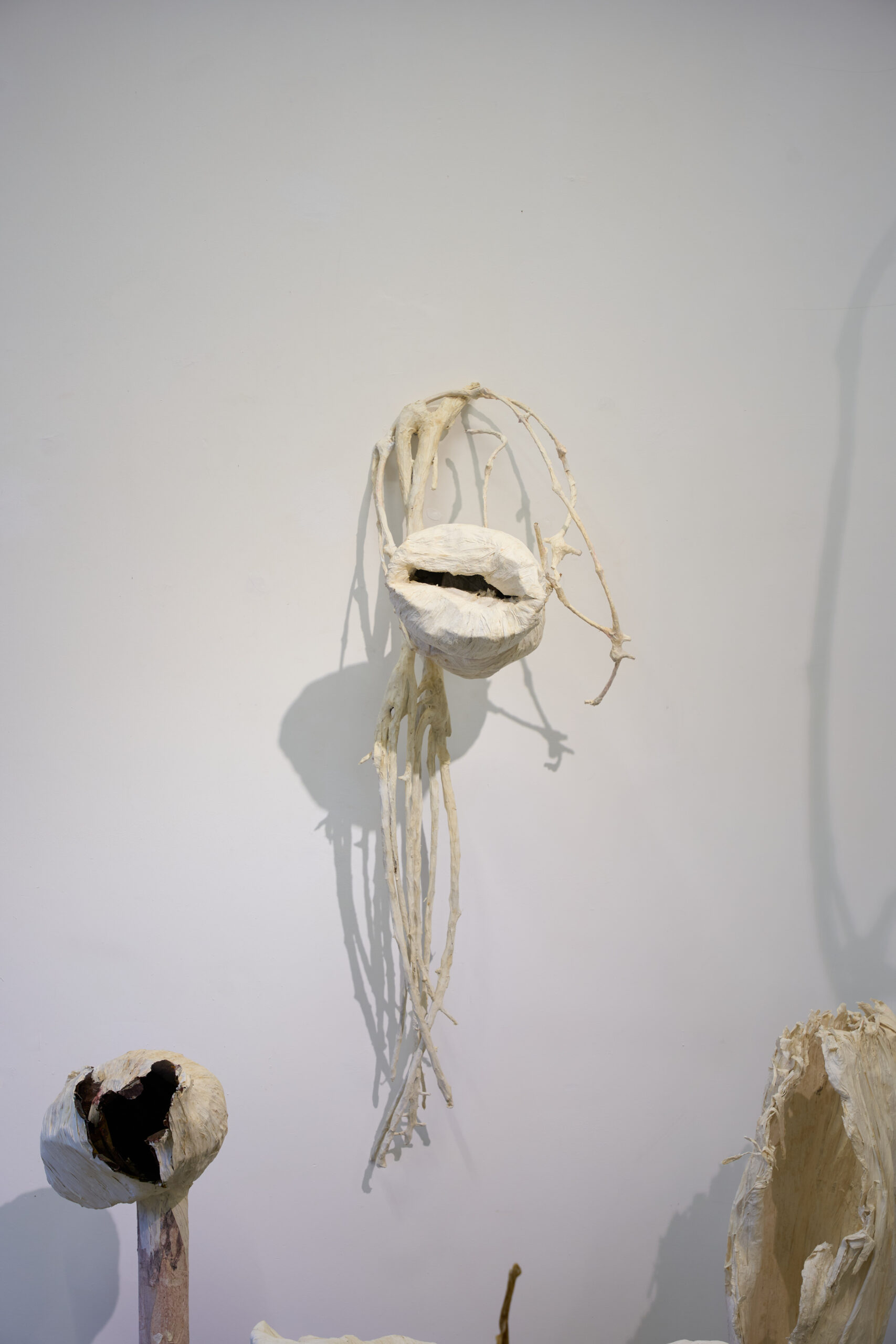 Empty, fragile, vulnerable, and at the same time—enduring. They bear the trace of presence, the witness of life, yet already somehow after life. Sculptural forms abandoned by their contents resemble discarded shells, husks, cocoons from which what was once organic has moved on—somewhere farther, somewhere else. It has crawled away, slipped out, flown off. What remains is no longer organic, no longer biological, and yet—it is not dead.
In the monistic perspective of G. W. Leibniz, we find the concept of monads: autonomous beings composed of a single substance. Within his philosophy, the death of organisms may be interpreted not as the disappearance of substance but as its transformation. Unlike in a dualistic ontology, the emphasis here is on processuality—on the transformation of matter in its relation to form. Monads are, in this sense, metaphysically immortal: they cannot be destroyed by natural processes.
In her series of sculptural works made from plant-based pulp, Dorota Buczkowska refers to the moment when life itself passes into form, and form begins to breathe with its own non-biological rhythm. She is drawn to Leibniz’s metaphysical vitalism, which stands in opposition to a mechanistic vision of nature that treats it as a dead and passive mechanism. In Leibniz’s view, matter is not passive, and there is no fragment of the universe that is entirely dead or empty. The death of an organism is always a transformation, never an annihilation.
Buczkowska’s objects are “traces of transformation”—bodies after release, remnants of the act of life. These forms resemble shells, cocoons, bark, nests—things that once sheltered life and now echo it. Sculpted from plant pulp—what the artist calls the matter of life—they speak of the transformation of biological substance into artistic form. At the same time, within the artist’s intermedial practice, the continuous reworking of both motifs and material is crucial. A kind of recycling turns the entire body of work into a holistic unity, preserving ontological continuity.
The sculptures are accompanied by paintings—new works that bear the distinctive imprint of her organic approach. The abstractions resemble living tissues observed under a microscope. The canvases inhabit a life of their own, often seemingly presenting darkness and emptiness. Yet structure is present—and a body that breathes—a continuous process of change and transformation. Again, the breath, the suspension in-between, a form of survival.
Curator: Ewa Opałka